
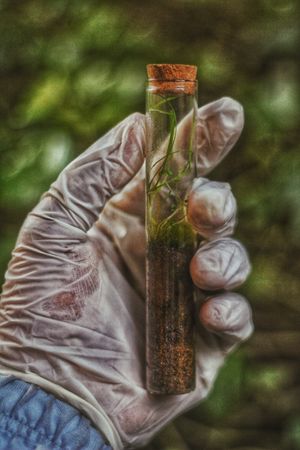
For almost 30 years, I have grown vegetables in nurseries, greenhouses, open fields, and in hydroponics.
And before every season, I do the exact same thing: I test the soil.
Not because it’s nice to know. Because if I don’t know what’s in the soil, I am just guessing how much fertilizer to give. And guessing costs money – too much fertilizer burns the plants, too little starves them.
In this guide I will show you how I test my soil, and the 3 kits I recommend. They all test the same things – pH + nutrients – but they work in 3 different ways.
Why test your soil?
Soil testing tells you 2 things you cannot see with your eyes:
1. pH – how acidic or alkaline your soil is. For most vegetables, you want 6.0 – 7.0. If pH is wrong, the plant cannot absorb nutrients even if you fertilize.
2. Nutrients – is there enough Nitrogen (N), Phosphorus (P) and Potassium (K) in the soil?
If you skip this step, you are fertilizing blind.
How I collect a sample – don’t skip this
This is where most beginners make a mistake. They take one handful of soil from one corner and test it.
Don’t do that.
- Take 5-6 small samples from different areas of your garden
- Use a trowel, go 10-15 cm deep
- Mix them all together in a bucket
- Let the mix dry a little
- Now test that mix
One sample = one spot. Mixed sample = your real garden.
The 3 kits – which one is for you?
Here is the quick comparison, then I explain each one:
| 1662 Professional Kit | pH, N, P, K | Color comparison, no batteries | Most tests for the money |
| Digital Soil Test Kit | pH, N, P, K | Digital optical reader + capsules | Most accurate, no guessing colors |
| 3-Way Digital Analyzer 1836 | pH, Fertility, Temp | Probe in soil, instant | Fast daily checks, no capsules |
1. The classic – for most tests for your money
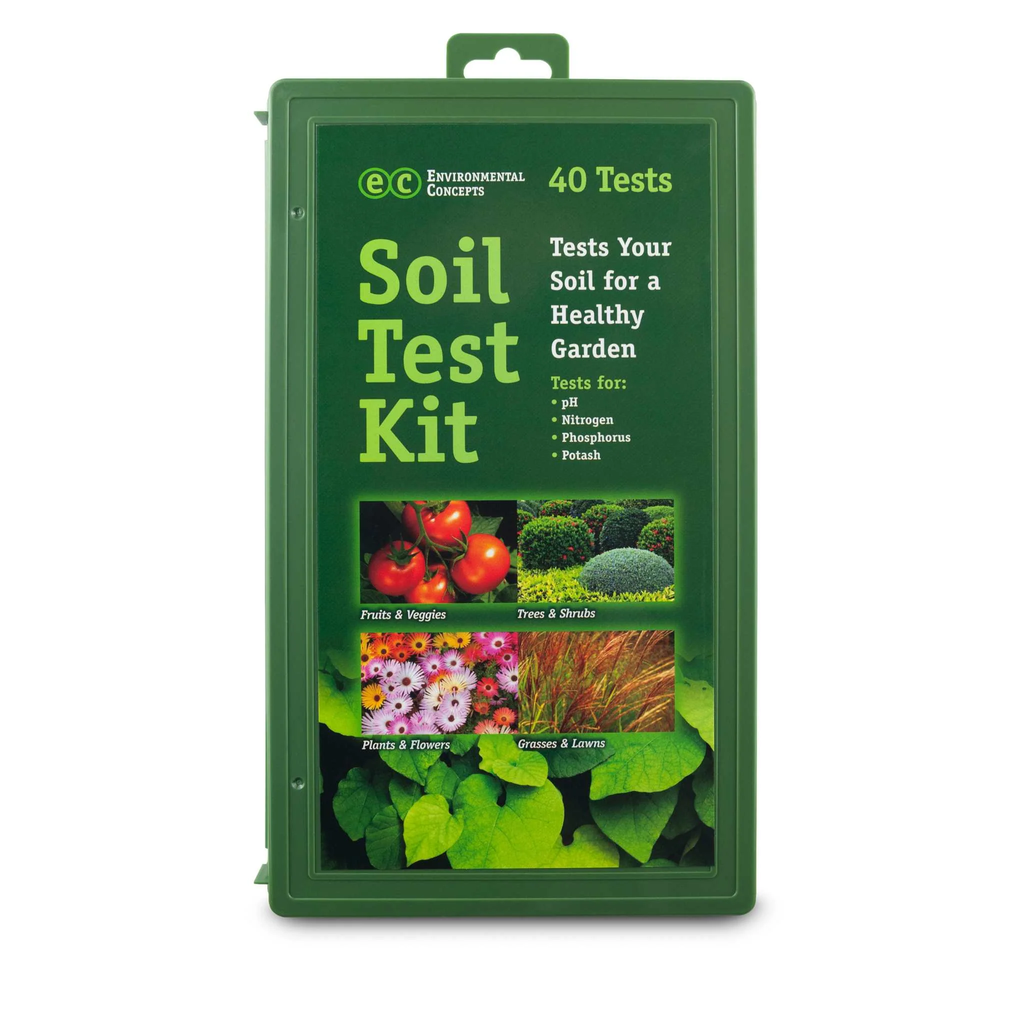
Luster Leaf 1662 Professional Soil Kit
This is the classic kit. 40 tests total – 10 tests for each: pH, Nitrogen, Phosphorus, Potash (Potassium).
How it works: You mix your soil with the reagent, and you compare the color to the color chart. It has a patented color comparator system to make it easier.
What you get:
- 40 tests
- Test tubes, reagents, color charts
- Plant guide for over 450 plants + fertilization guidelines
- No batteries needed, Made in USA
Use it when: You want to test many times in a season, and you don’t mind reading colors yourself.
Perfect for: Beginners who want the best value. 40 tests will last you a long season.
2. The accurate one – no guessing colors
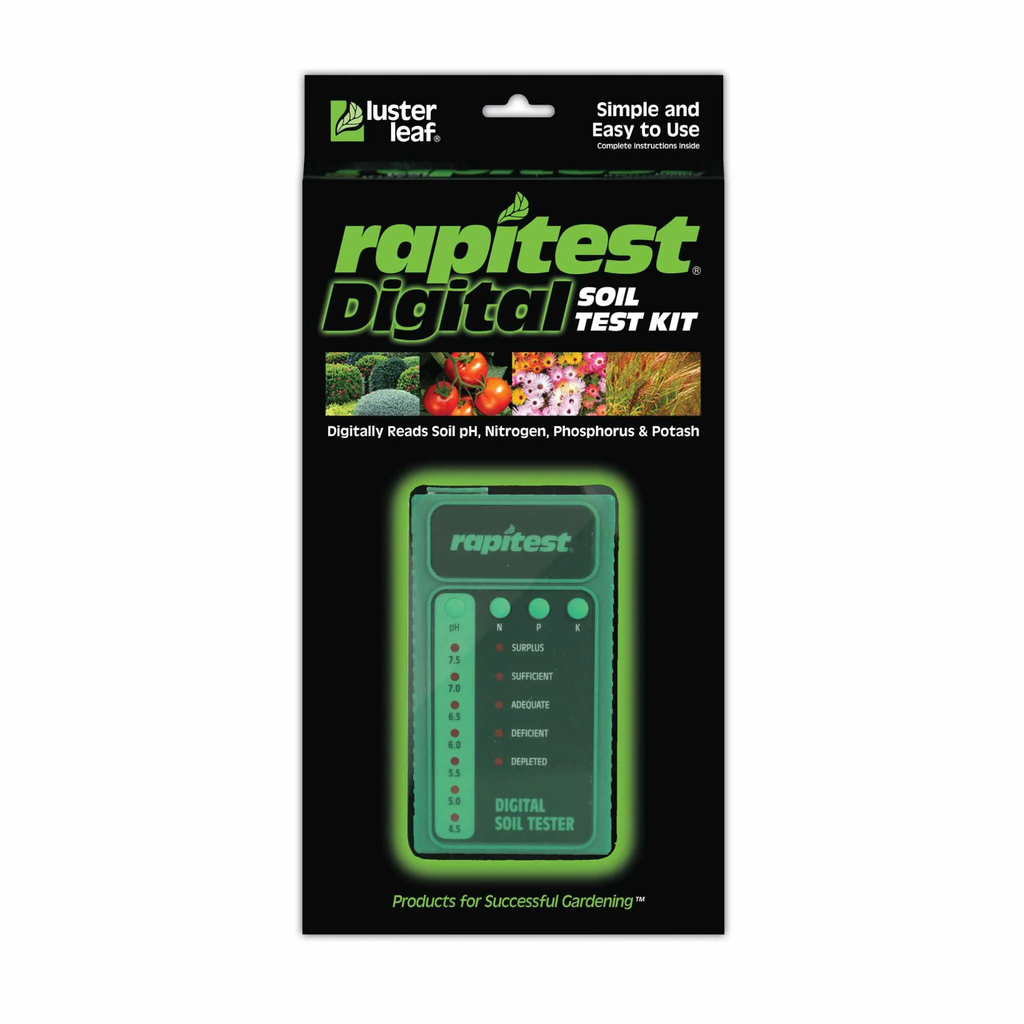
Luster Leaf Rapitest Digital Soil Test Kit
This kit also tests pH, N, P, and K – each one separately. The difference is the reading.
How it works: You use reagent capsules + color-coded test tubes, but instead of guessing the color with your eyes, the patented optical test chamber reads it for you and shows the result on a digital LED display.
What you get:
- Digital LED readout
- 25 reagent capsules
- 4 color-coded test tubes + holder
- Fertilization guidelines for over 450 plants
Use it when: You don’t want to guess “is this light green or dark green?” You want the device to tell you.
Perfect for: Anyone who wants the most precise home result without sending to a lab.
3. The fast one – for daily checks
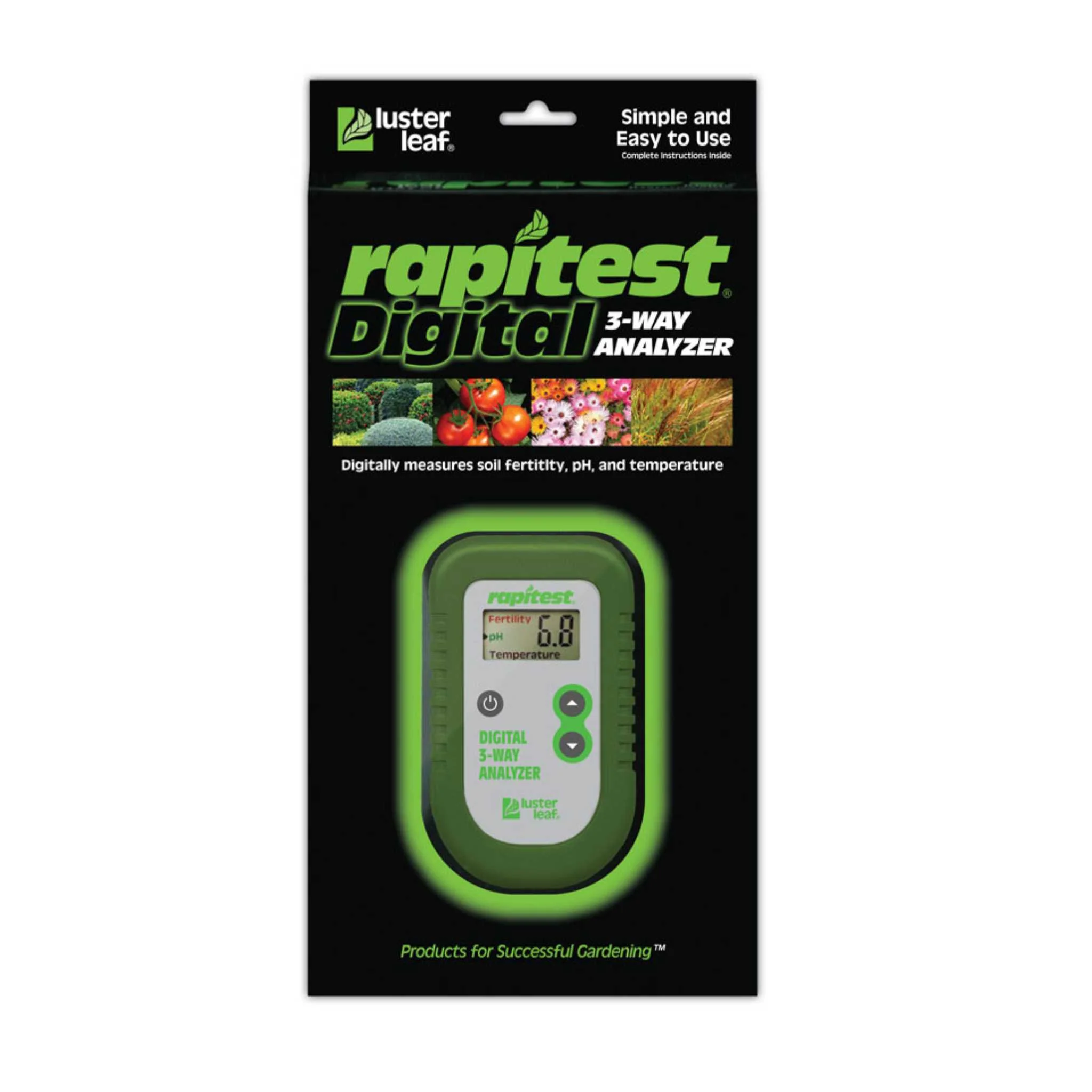
Luster Leaf Rapitest 3-Way Digital Analyzer 1836
This one is different. It also tests pH + fertility, but without any capsules or chemicals.
How it works: You push the probe into the soil. In seconds you get a digital reading for pH, fertility, and soil temperature.
It also auto-adjusts the pH and fertility readings based on soil temperature. That matters, because cold soil reads differently than warm soil.
What you get:
- Digital display, easy to read
- No capsules to buy, use it again and again
- Temperature-compensated readings
Use it when: You already planted, and you want to check quickly every few days if the soil is still good.
Perfect for: Pots, balcony gardens, greenhouses, and anyone who hates messing with chemicals.
My advice after 20 years:
- Just starting and want the most tests for your money? Start with No. 1, the 1662 Professional Kit. 40 tests for $29.99 is the best value.
- Want the most accurate result and hate guessing colors? Take No. 2, the Digital Soil Test Kit.
- Want to check your soil fast every day? Take No. 3, the 3-Way Analyzer. I keep one in my pocket in the greenhouse.
Many of my growers end up with two: the 1662 kit for the start of the season, and the analyzer for weekly checks.
What soil test kits cannot do
Be honest: a home kit is not a laboratory.
It will not tell you your exact soil structure, organic matter %, or water-holding capacity with lab precision. For a commercial farm, I still send samples to a lab once a year.
But for a home garden or a small farm, a home kit is 90% of what you need, for 10% of the price.
Bottom line
Don’t guess. Test.
Take 5 samples, mix them, test them, and then fertilize.
You might also like these articles:
- Bacterial Spot on Tomatoes and Peppers: Symptoms, Causes and Treatment

- Beneficial Insects for Vegetable Garden: Best Bugs for Natural Pest Control
- Benefits of Growing in a Greenhouse: Is It Worth It for Home Gardeners?
- Best Pesticides for Vegetable Plants: Compare Products by Pest & Disease
- Blower Sprayers for Garden Pest Control: Better Coverage Than Backpack Sprayers
- Caterpillars on Tomatoes & Cabbage: How to Control Them Organically with BT Spray
- Fusarium Wilt on Tomatoes: Signs, Prevention & Best Treatment Guide
- Gray Mold on Tomatoes & Strawberries: How to Control Botrytis Fast
- How to Combat Pests During Growing Season: The Importance of Using Multiple Pesticides to Prevent Resistance and Maximize Yield
- How to differentiate between pesticides
- How to find your pesticide in a store
- How to Get Rid of Ants: Home Remedies, Gel Baits, Sprays and Granules