
Avocado trees are evergreen trees that belong to the Lauraceae family, which also includes cinnamon and bay laurel.
They are native to Mexico and Central America but are now widely cultivated in other parts of the world with a suitable climate, such as California, Florida, and parts of South America, Asia, and Africa.
Avocado fruit is pear-shaped, with a large central seed. The fruit is high in healthy fats, vitamins, and minerals, making it a popular ingredient in various cuisines and a staple in many healthy diets.
Are Avocado Trees Deciduous?
No. Avocado trees are evergreen, not deciduous.
They do not drop all their leaves in winter like a maple or apple tree. They keep leaves year-round.
They do drop some old leaves throughout the year, especially in spring when new growth pushes old leaves off. That is normal. If your avocado drops a lot of leaves at once, that is not deciduous behavior – that is stress: overwatering, underwatering, poor drainage, or cold.
Are Avocado Trees Hard To Grow?
Not hard, but picky about 2 things: cold and drainage.
If you give them warm climate + well-drained soil, they are easy. If you give them cold + wet soil, they will die.
Most failures are not because avocado is hard. They are because of:
- Planted in heavy clay that stays wet – roots rot
- Planted where frost hits – leaves burn, tree dies
- Overwatered in winter – root rot
- No pollination partner – little fruit
Fix those 4, and avocado is an easy tree.
Avocado Climate Requirements – The Most Important Part
Avocado trees are sensitive to cold temperatures, and require warm conditions to thrive.
Avocado Climate To Grow:
- Best range: 60-85°F (16-29°C)
- Growth stops below 50°F (10°C)
- Young trees: damage starts at 32°F (0°C) – frost
- Mature Hass: can survive short dip to 25-30°F (-3 to -1°C) if healthy and dry, but flowers and small fruit die at 32°F
- Fuerte, Bacon, Zutano: more cold-tolerant than Hass, by a few degrees
- Heat: Avocado handles heat to 100°F+ if watered, but flowers drop in extreme dry heat + wind
Avocado Climate Conditions – What Kills It:
- Frost on young tree – #1 killer
- Cold wet soil in winter – root rot
- Strong dry wind + heat during flowering – flowers drop, no fruit
- Salt in water or soil – leaf burn, brown tips
If you live in a colder area:
- Choose a cold-tolerant variety: Bacon, Fuerte, Zutano, not Hass alone
- Plant on south side of house, protected from north wind
- Plant in spring, not fall, so tree has full summer to establish before first frost
- Cover young tree with frost cloth on frost nights, do not use plastic directly on leaves
- Plant in container and move inside on frost nights if winters are cold
Avocado Climate And Soil
Avocado trees require well-drained soil that is rich in nutrients.
They do best in slightly acidic soils with a pH between 6 and 7.5.
Avocado Soil – The Rules:
- Drainage is more important than fertility. If water sits, roots rot.
- Heavy clay = death. Sandy loam = best.
- If soil in your area is too heavy or poorly-draining, plant your avocado tree on a raised bed or mound to improve drainage. Raised bed 12-18 inches high is often the difference between alive and dead.
- Soil must be free of Phytophthora – the fungus that causes root rot. Do not plant avocado where an old avocado died from root rot without fixing drainage first.
- Test pH. If pH is above 7.5, leaves turn yellow from iron chlorosis. Add sulfur or acidifying fertilizer only after soil test.
Types Of Avocado Trees And Their Characteristics
Choosing the right type of avocado tree to grow depends on climate, soil, and personal preferences.
A-Type vs B-Type – Why You Need Both:
Most avocado trees are not strictly male or female, but are instead classified as “A” or “B” types based on their flowering behavior.
A-type avocado trees produce flowers that open as female in the morning and close in the afternoon, while B-type avocado trees produce flowers that open as male in the afternoon and remain open for the following day as female.
Therefore, avocado trees of either type can produce fruit on their own, but they will generally produce better and more abundant crops if there are trees of the opposite type nearby to cross-pollinate with.
For optimal pollination and fruit production, plant at least one A-type and one B-type avocado tree within close proximity of each other.
Common Varieties:
- Hass – A-Type: The most popular variety, known for its creamy texture and rich flavor. Smaller tree, reaching heights of around 20 feet, ideal for backyard gardens. Best fruit quality, but least cold-tolerant.
- Fuerte – B-Type: Larger tree, reaching heights of up to 40 feet. Thin, easy-to-peel skin, slightly nutty flavor. More cold-tolerant than Hass. Good pollinator for Hass.
- Reed – A-Type: Large, round fruit with creamy texture and mild flavor. Larger tree, reaching heights of up to 40 feet, ideal for larger yards or commercial orchards. Late season.
- Bacon – B-Type: Smaller tree, reaching heights of around 20 feet. Smooth, thin skin, buttery texture with mild flavor. Most cold-tolerant of common varieties. Good for colder areas.
- Pinkerton: Thick, bumpy skin and rich, buttery flavor.
- Zutano: Smooth, green skin and mild flavor. Cold-tolerant, good pollinator.
- Gwen: Known for its large size, creamy texture, and nutty flavor.
- Lamb Hass: Cross between Hass and Gwen, with smooth skin and rich, buttery flavor.
- Sir Prize: Thin, green skin and creamy, nutty flavor.
Best Pair For Home Garden:
Hass (A) + Fuerte or Bacon (B). Hass for fruit quality, Fuerte / Bacon for pollination + cold tolerance.
Planting An Avocado Tree
Preparing The Soil And Site:
Choose a suitable site for planting your avocado tree. Look for a spot with well-drained soil, preferably on a gentle slope. Full sun, at least 6 hours direct sun. Protected from strong wind.
Dig a hole that is twice as wide and as deep as the root ball of your tree. Do not dig deeper than root ball – avocado planted too deep rots.
Add organic matter, such as compost or manure, to the soil to improve its nutrient content and water-holding capacity. Do not add fertilizer to the hole at planting – it burns young roots.
Planting Techniques And Tips:
When planting your tree, gently remove it from the container and loosen the roots. Do not break the root ball – avocado roots are fragile.
Place the tree in the hole, making sure that the top of the root ball is level with the ground surface, or slightly above. Fill the hole with soil, gently pressing it down to remove any air pockets.
Create a basin around the tree to help retain water. Mulch the area around the tree to help retain moisture and suppress weed growth. Keep mulch 6 inches away from trunk – mulch touching trunk causes rot.
Stakes or support may be needed for the first year to help the young tree stay upright.
Watering And Fertilization – Avocado Care
Avocado trees require regular watering, especially during their first few years of growth.
Water deeply and infrequently, making sure that the soil remains moist but not waterlogged.
- Young tree: water 2-3 times per week in summer, 1 time per week in winter, depending on soil and rain. Soil should dry slightly between waterings.
- Mature tree: water deeply once a week in summer, less in winter. Do not water on a schedule – check soil 4-6 inches deep. If wet, do not water.
- Overwatering in winter is the #1 cause of root rot. In winter, avocado uses almost no water. Cut watering in half.
Fertilizer – What To Use:
Fertilize your tree regularly with a balanced fertilizer to ensure healthy growth and fruit production. Avoid using too much nitrogen, as this can promote vegetative growth at the expense of fruit production.
1. FoxFarm Happy Frog Citrus and Avocado Fertilizer 7-3-3 – Organic
>> See FoxFarm Happy Frog Citrus and Avocado Fertilizer 7-3-3 <<
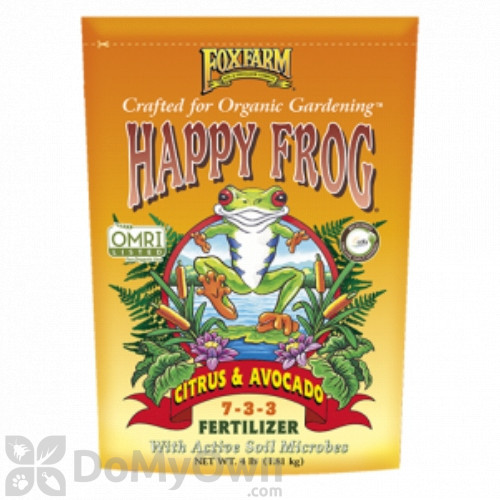
- Specially formulated plant food that is designed to produce juicier and flavorful citrus and avocados
- Features an NPK ratio of 7-3-3 with just the right balance of primary nutrients to boost the development of citrus and avocado trees so that it can deliver fresh-tasting lemon and lime, as well as smooth and perfectly ripe avocados
- OMRI listed so it is safe for organic gardening
- Best for home garden, organic feeding, young trees
2. Ultragreen Citrus And Avocado Food 10-6-4
>> See Ultragreen Citrus And Avocado Food 10-6-4 <<
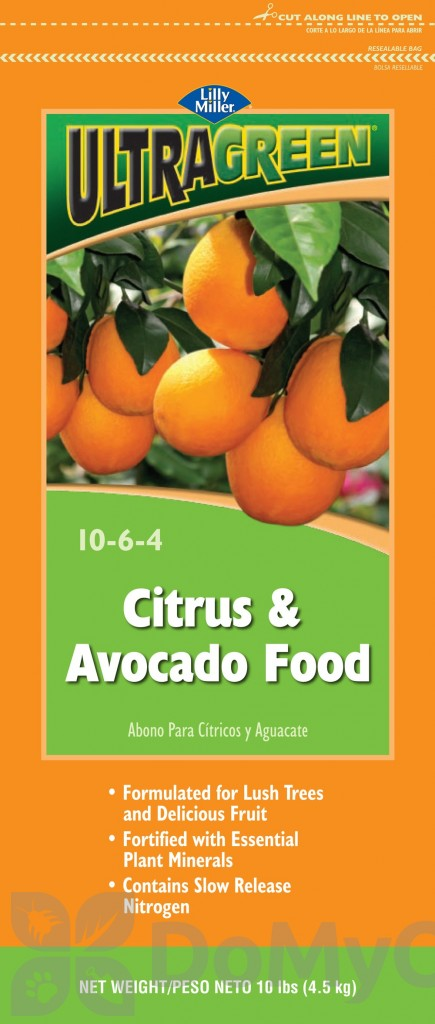
- Citrus and avocado trees of all kinds need a special combination of plant foods to grow their best and produce delicious fruit
- Blended traditional and synthetic plant foods to produce a unique fertilizer that provides nitrogen from five different sources
- Start feeding in February or March and then every 6 weeks after that, up to four times each year
- AVOCADOS: Feed in February and in June
- Best for mature trees that need strong feeding for fruit production
How To Fertilize:
- Young tree, first year: small amount, every 6-8 weeks in spring / summer only, no fertilizer in winter
- Mature tree: February + June are the two main feedings for avocado. Do not fertilize in late fall – it pushes soft growth that frost kills.
- Yellow leaves with green veins = iron chlorosis, usually pH too high or overwatering, not lack of fertilizer. Fix drainage and pH first.
Caring For Your Avocado Tree
Pruning And Shaping The Tree:
Regular pruning is essential to maintain the shape and size of your avocado tree. Prune your tree in late winter or early spring, before new growth begins.
Remove any dead, damaged, or diseased branches, as well as any crossing or rubbing branches. Thin out the canopy to allow for better air circulation and sunlight penetration.
If necessary, you can also shape your tree to encourage a more compact growth habit. Do not prune heavily in summer – exposed fruit sunburns.
Pest And Disease Control:
Avocado trees are susceptible to pests and diseases, including spider mites, thrips, root rot, and fungal diseases such as anthracnose and powdery mildew.
The #1 Disease – Phytophthora Root Rot:
Phytophthora is a soil-borne fungus that causes root rot in avocado trees, leading to stunted growth and death.
Signs: leaves turn yellow, wilt, drop, tree looks thirsty even when soil is wet, small fruit, dieback from top.
Treatment involves improving soil drainage and reducing irrigation, as well as applying fungicides.
3. Monterey Garden Phos Systemic Fungicide – For Phytophthora Root Rot
>> See Monterey Garden Phos Systemic Fungicide <<
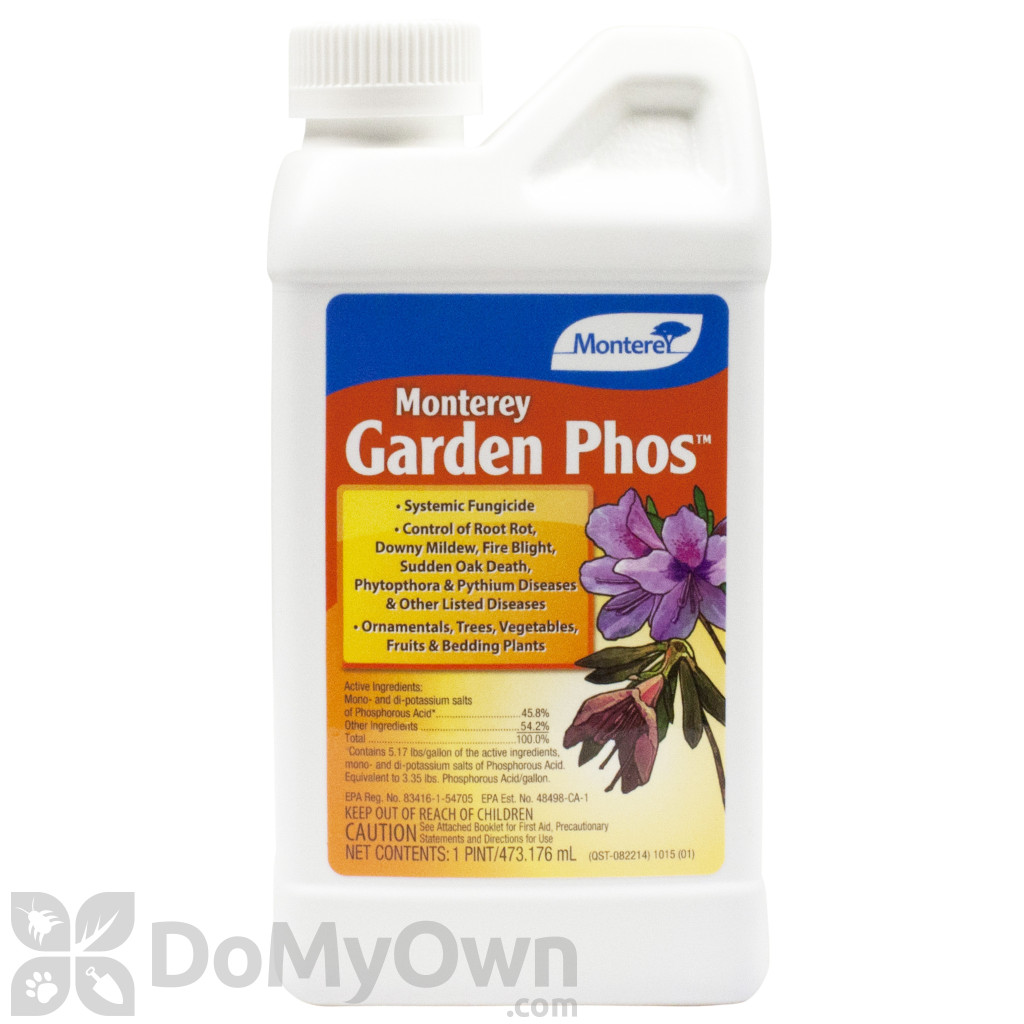
- A systemic fungicide that will control plant diseases such as Phytophthora, downy mildew, pythium, black spot, root rot, anthracnose, and more
- Yes, Monterey Garden Phos Systemic Fungicide is labeled to treat root rot in Avocado trees
- Classified in the Phosphonates Group with the FRAC Code of P 07
- When using Monterey Garden Phos Systemic Fungicide for root rot on avocado trees, the methods to treat are either a tree injection or a foliar spray
- For a foliar spray, the mixing rate is 1/3 fl oz per gallon of water
- Can be applied as a soil drench to ornamentals at a rate of 1/8 tsp per gallon of water, apply each 25 gallons of solution to an area of 100 sq. ft.
- The most recommended method and most effective way of preventing Phytophthora root rot disease is to provide good drainage and to practice good water management
- Fungicides help, but they do not replace drainage. If soil stays wet, root rot will come back.
Other Avocado Pests – Quick Guide:
- Avocado Thrips – small, winged insects feed on young fruit, causing scars. Use Spinosad, release predatory mites.
- Avocado Lace Bug – chlorotic speckling on leaves, defoliation if not controlled. Use insecticidal soap, release lacewing larvae.
- Avocado Red Mite / Brown Mite – tiny mites feed on leaves, causing discoloration and defoliation. Use miticide, release predatory mites.
- Avocado Whitefly – small, white insects feed on leaves, defoliation if not controlled. Use insecticidal soap, release Encarsia Formosa.
- Avocado Sunblotch – viral disease, yellow streaking on leaves and stem dieback. There is no cure for sunblotch, infected trees must be removed and destroyed. Buy certified disease-free trees only.
4. Avocado Potting Soil – For Container And Raised Bed
>> See Avocado Potting Soil – Perfect Plants <<
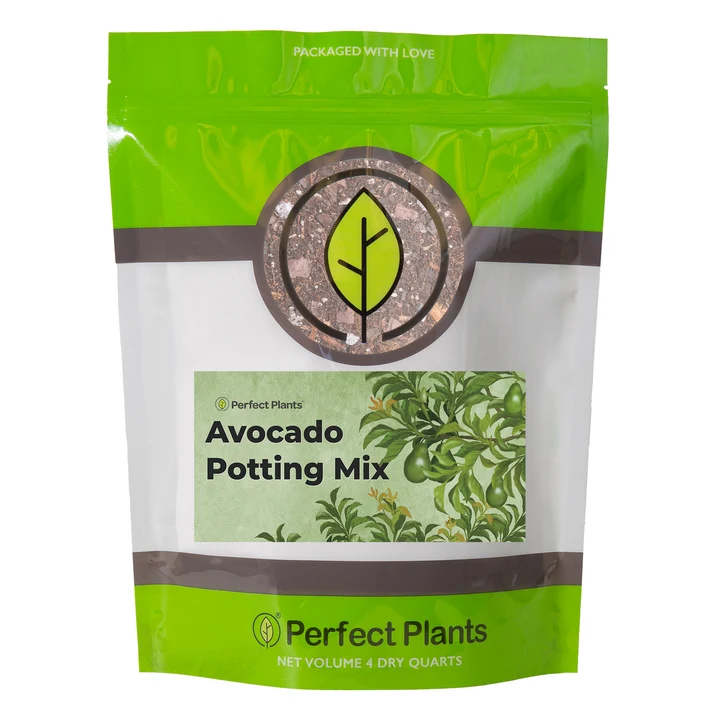
- The best potting soil for avocados is loose, fast-draining, and slightly acidic
- Specially formulated with peat moss, perlite, coconut coir, and organic amendments like worm castings and mycorrhizae to support healthy roots and vigorous growth
- Creates the ideal sandy-loam texture that avocado trees love, whether you’re growing indoors or out
- Avocado trees thrive in soil that is rich in organic matter, drains well, and maintains a slightly acidic to neutral pH (around 6-7)
- Includes peat moss for acidity, perlite and coir for drainage, and dolomite lime to balance pH – plus added nutrients from organic fertilizer and worm castings
- For container: at least 12-16 inches in diameter, with drainage holes, filled with well-draining Avocado Potting Soil to prevent waterlogging and root rot
- To repot: choose a pot 2-4 inches wider, fill bottom with fresh Avocado Potting Soil, set tree so top of root ball is just above soil line, backfill, water thoroughly, place in sunny spot
Harvesting And Storing Avocados
A young avocado tree does not produce fruit in its first years. When does an avocado tree bear fruit? Only from the third year of its planting, often 3-4 years for grafted tree, 7-10 years for seed-grown tree.
Important Correction: Avocado does NOT ripen on the tree.
Avocado matures on the tree, but ripens only after you pick it. If you leave it on the tree, it stays hard. If you pick it too early, it will never ripen, it will shrivel.
The fruit is ready to harvest when it is fully developed and has a slight give when gently squeezed after picking, not on the tree. To test: pick one fruit, leave at room temperature 7-10 days. If it ripens soft and creamy, the rest are ready. If it shrivels and stays hard, wait 2-3 weeks and test again.
To store avocados, keep them at room temperature until they are ripe, then store them in the refrigerator to slow down the ripening process.
Common Problems
Leaf Drop:
Leaf drops can be caused by overwatering, underwatering, poor drainage, or exposure to cold temperatures. To address leaf drops, make sure that your tree is receiving the right amount of water and that the soil drains well. Avoid exposing your tree to cold temperatures or sudden changes in temperature.
Poor Fruit Production:
Poor fruit production can be caused by a lack of pollination, poor soil nutrition, or improper pruning. To encourage fruit production, make sure that your tree is receiving enough water and nutrients. Make sure that your tree is pruned properly to encourage a healthy canopy and allow sunlight to reach the fruit. Plant an A-type + B-type together for best pollination.
Sunburned Fruit:
Sunburned fruit occurs when the fruit is exposed to direct sunlight for too long. To prevent sunburned fruit, consider shading the fruit with a light-colored cloth or using reflective mulch around the base of the tree. Avoid pruning the tree during the summer months when the fruit is still developing – leaves protect fruit.
FAQ
Are avocado trees deciduous?
No. Avocado trees are evergreen. They keep leaves year-round, drop old leaves in spring when new growth comes.
Are avocado trees hard to grow?
Not if you give them warm climate and well-drained soil. Cold + wet soil is what kills them. Fix drainage and frost protection, and they are easy.
What is the avocado climate requirements?
Best 60-85°F (16-29°C). Growth stops below 50°F. Frost damages young trees at 32°F. Hass is least cold-tolerant, Bacon / Fuerte / Zutano are more cold-tolerant.
What is the best avocado climate to grow?
Subtropical or tropical climate, full sun, protected from cold wind, well-drained soil, pH 6 to 7.5.
What is avocado care?
Water deeply but infrequently, let soil dry slightly between waterings, fertilize in February and June, mulch but keep mulch away from trunk, prune in late winter, protect from frost.
What soil does avocado need?
Well-drained, slightly acidic, pH 6 to 7.5. Heavy clay must be planted on raised bed 12-18 inches high.
When does avocado bear fruit?
Grafted tree: 3-4 years. Seed-grown tree: 7-10 years, and fruit quality is unpredictable. Always buy grafted tree, not seed.
Do I need two avocado trees?
One tree can fruit alone, but you get much more fruit with one A-type + one B-type together. Best pair: Hass (A) + Fuerte or Bacon (B).
You might also like these articles:
- How To Grow Tomatoes: 7 Easy Steps [From Seed To Harvest]

- Soil Testing for Beginners: The 3 Kits I Actually Use After 30 Years
- 5 Best Lawn Fertilizers for a Green Lawn
- How to Grow Potatoes: Planting, Hilling, Fertilizing, Diseases and Harvest
- How To Grow An Avocado Tree: Avocado Climate, Soil, Varieties And Planting
- Common Lawn and Garden Weeds and the Best Herbicides to Kill Them
- How to Get Rid of Slugs and Snails in Your Garden: Organic Methods and Baits
- Tomato Pith Necrosis: Symptoms, Causes and How to Stop It from Spreading
- Tomato Fruit Problems: Sunscald, Cracking, Cat Face, Blossom End Rot, Zippering, Puffiness & More (2026)
- How to Use Roundup: When to Plant After Spraying, Safety & Alternatives
- Best Fertilizer for Each Plant Growth Stage (2026)
- Greenhouse Gardening Benefits: Is It Worth It?