Effortless High-Tunnel Winter Greens: Spinach, Lettuce & Kale
November 22, 2026
Short answer: Yes, you can grow greens all winter in an unheated high tunnel in the US. A high tunnel protects from wind, rain, and direct frost, while staying cooler than a fully heated structure. For more details, see Winter Greens in a High Tunnel: How to Grow Spinach, Lettuce & Kale All Winter Without Heat (2026).
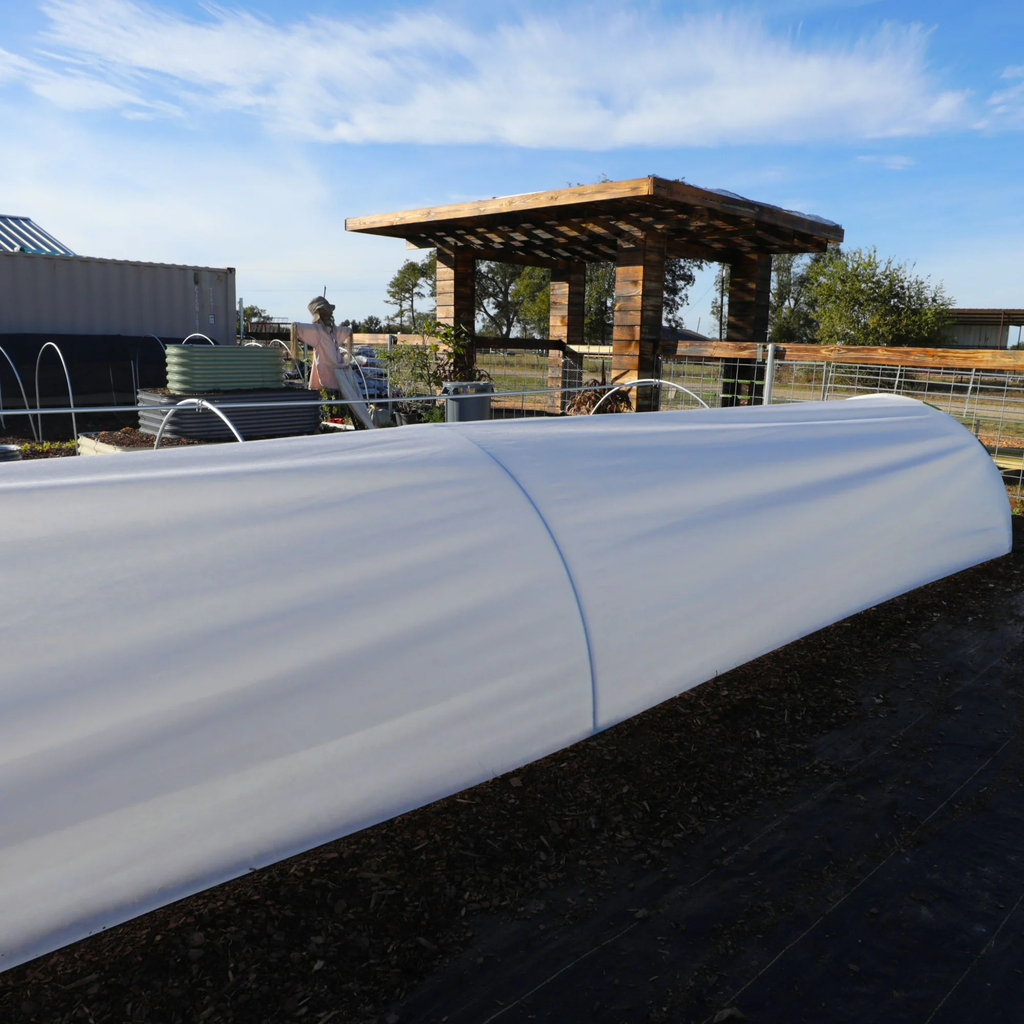
Add a frost blanket inside the tunnel to increase protection and warm the air by several degrees. With this simple layer, you gain 7–10°F warmer than outside, creating a steadier environment for cool-season crops.
That warmer microclimate is enough for spinach, lettuce, and kale to grow slowly all winter, especially with steady light and consistent moisture. Regularly monitor for pests and disease, and stagger plantings to maintain a continuous harvest.
You don’t need a heater. You need cold-hardy crops, the right planting time, and double cover.
Will an Unheated High Tunnel Hold Heat?
Not like a house. Don’t expect 70°F at night.
An unheated high tunnel in winter will be about 5-10°F warmer than outside at night. That small difference is everything.
How it works:
Daytime – Sun heats the soil inside the tunnel. Soil stores heat.
Nighttime – Soil releases heat slowly. The tunnel plastic stops wind, so heat does not blow away immediately.
Double cover – A frost blanket over the bed inside the tunnel adds another 5-10°F. Together – tunnel + frost blanket = 10-15°F warmer than outside.
Example: It is 25°F outside in Zone 6. Inside the tunnel it is 32°F. Under the frost blanket it is 38-40°F. Spinach grows at 38°F. Outside, it would be frozen solid.
That is why winter greens work. You are not heating. You are protecting.
What Greens Actually Grow in Winter in the US?
Not tomatoes. Not cucumbers. Not peppers. They need heat.
These grow in cold:
Crop
Cold Tolerance
Growth in Winter
Notes
Spinach
Down to 20°F with cover
Slow but steady
Best winter green. Cold improves flavor.
Kale
Down to 15°F with cover
Slow, very hardy
Frost makes kale sweeter.
Lettuce (Leaf / Butterhead)
Down to 28°F with cover
Slow, needs sun
Use leaf lettuce, not head lettuce.
Arugula
Down to 25°F with cover
Fast for winter
Harvest young, before it bolts.
Swiss Chard
Down to 25°F with cover
Slow
More cold-sensitive than kale.
Asian Greens (Tatsoi, Mizuna)
Down to 20°F with cover
Fast
Great for cold, often overlooked.
Best for beginners: Spinach + Kale. They are the most cold-hardy and the most forgiving if you are late to cover.
When to Plant for Winter Harvest in the US
This is the mistake most people make. They plant in December and wonder why nothing grows.
Plant in September – October for winter harvest.
Why? Plants need to grow roots before the coldest weather. A spinach plant with 4-5 true leaves in November will survive winter and keep producing. A spinach seed sown in December will just sit there.
US Planting Guide:
Zone 7-9 (Southeast, Texas, California, Arizona): Sow October – November. Harvest November – March.
Zone 5-6 (Midwest, Northeast, Mid-Atlantic): Sow September – early October. Harvest October – March, with double cover in January – February.
Zone 3-4 (Upper Midwest, Northern New England): Sow August – September. Harvest until December, then plants go dormant. They regrow in March.
If you are reading this in November and you haven’t planted yet – plant now in Zone 7-9. In Zone 5-6, plant spinach and kale now, they will establish roots before hard freeze. In Zone 3-4, plant for early spring harvest, not winter harvest.
Double Cover: High Tunnel + Frost Blanket
This is the system that works in the US without heat.
Step 1 – High Tunnel: Your high tunnel is the outer layer. It blocks wind, rain, and snow. Keep doors closed at night, open on sunny days for ventilation. If it gets above 60°F inside on a sunny winter day, vent – greens bolt in heat.
Step 2 – Frost Blanket Inside: Lay a frost blanket directly over the bed, on low hoops or floating on plants. This is the inner layer.
Frost blanket weight matters:
0.9 oz – Light, 2-4°F protection. For fall, not deep winter.
1.5 oz – Medium, 4-6°F protection. Good for most winter greens.
2.5 – 4.0 oz – Heavy, 8-10°F+ protection. For Zone 5 and colder, January – February.
Use 1.5 oz for most of winter. Switch to 2.5 oz or 4.0 oz for the coldest 3-4 weeks.
Our Pick: Heavy-Duty Frost Blankets – Bootstrap Farmer 10 ft wide frost blankets in 0.9 oz, 1.5 oz, 2.5 oz, and 4.0 oz. Spun-bonded polypropylene, lets air, water, and light through. Provides 5-10°F+ freeze protection depending on weight. Use on low hoops or floating directly on plants.
Cold soil holds water longer. Overwatering in winter causes root rot, damping off, and mold.
Rules:
Water in the morning, not evening. Wet leaves at night + cold = disease.
Water only when top 1 inch of soil is dry.
Water at the base, not overhead if possible.
Don’t water before a hard freeze. Wet soil freezes harder.
In a high tunnel, rain does not water your plants. You have to water. Check soil moisture every 3-4 days in winter, not every day.
Harvesting Winter Greens
Harvest little and often. Don’t clear-cut the plant.
Pick outer leaves first, leave the center growing point. A spinach plant harvested leaf-by-leaf will produce for 3-4 months. A spinach plant cut to the ground will take 3 weeks to regrow, if it regrows at all.
Best time to harvest: late morning, after frost has melted and leaves are dry. Cold morning harvest tastes sweeter – cold converts starch to sugar in kale and spinach.
5 Mistakes That Kill Winter Greens
1. Planting too late Plant in fall, harvest in winter. Plant in winter, harvest in spring.
2. No ventilation on sunny days A high tunnel can hit 70°F on a sunny 35°F day. Open doors. Greens bolt in heat.
3. Using only one cover High tunnel alone is not enough in Zone 5-6 in January. You need tunnel + frost blanket.
5. Growing the wrong crops Tomatoes, peppers, cucumbers, basil will not grow in an unheated tunnel in winter in the US. Don’t waste space. Grow spinach, kale, lettuce, arugula.
What Seeds to Plant
Plant cold-hardy varieties, not summer varieties.
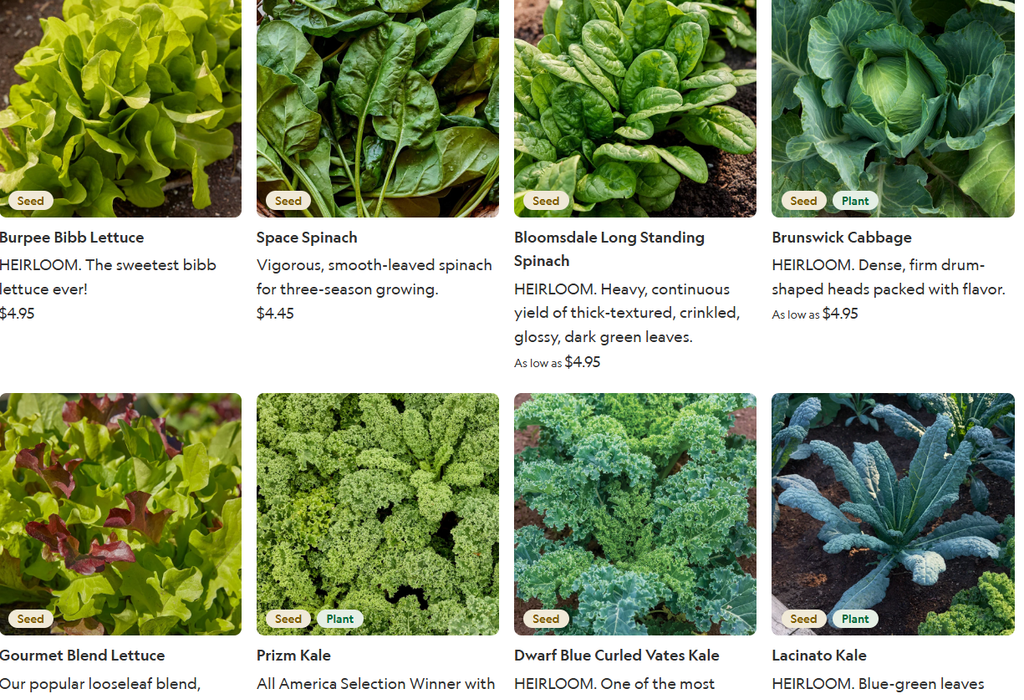
Spinach: Bloomsdale Long Standing – slow to bolt, cold-hardy.
Kale: Blend Kale, Lacinato, or Winterbor – all handle frost.
Lettuce: Buttercrunch, Bibb, or leaf lettuce mixes – head lettuce does not do well in winter.
Our Pick: Salad Greens Seeds – Burpee Organic lettuce, spinach, kale, arugula, and mesclun seeds. Bloomsdale Long Standing Spinach, Buttercrunch Lettuce, Bibb Lettuce, and Blend Kale – all good for fall and winter planting in the US.
Can I grow greens in winter without a high tunnel? Yes, in Zone 7-9 with just a frost blanket on low hoops. In Zone 5-6, you need a high tunnel + frost blanket for reliable harvest in January – February.
Do I need a heater in my high tunnel? No, not for spinach, kale, lettuce, and arugula. They are cold-hardy. A heater is for tomatoes and peppers, not greens.
How cold can spinach survive? Down to 20°F with a frost blanket. Without cover, spinach is damaged around 25°F.
Why are my winter greens growing so slowly? Short days + cold = slow growth. That is normal. They will grow faster in February – March when days get longer. Don’t over-fertilize to force growth in winter.
Should I fertilize winter greens? Feed lightly at planting. Don’t fertilize heavily in December – January. Plants are not growing fast enough to use it. EC will build up and burn roots. Resume light feeding in February when growth picks up.